
Ying Lab

AI for aging and longevity lab

Can we extend human lifespan by an order of magnitude?

Join the lab
Woodblock-style painting of a mouse, a naked mole-rat, a bat, a human seen from behind and a bowhead whale breaching, with a Greenland shark swimming below the waves.

Opening January 2027

We build AI models of how organisms age, use them to find and design interventions, and test what the models propose. Brain resilience is our first system.

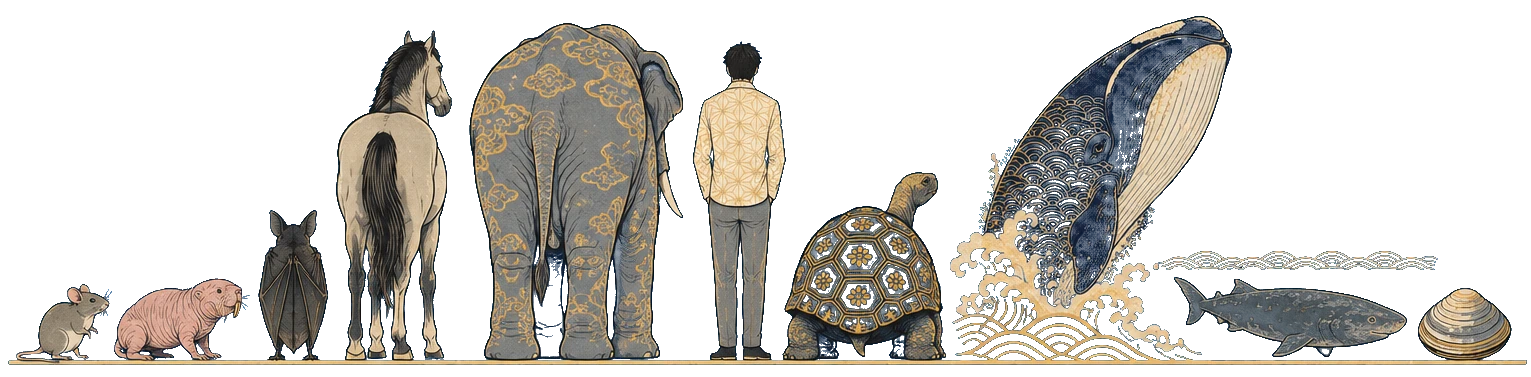
Maximum lifespan, years

Maximum recorded lifespan, on a logarithmic scale. Values from the AnAge database, rounded to whole years; the bowhead whale and Greenland shark values are estimates. Species are not drawn to scale.

Evolution has already changed lifespan by more than an order of magnitude

Across mammals, lifespan ranges from a few years to more than two centuries. Differences this large may depend on mechanisms that current interventions, which change lifespan by a small fraction, do not act on.

Our long-term mission is to extend human lifespan by an order of magnitude and to identify the biology required. We learn from lifespan variation across species, model it, and turn what the models find into drug targets and designed proteins that can be tested in human cells.

The lab is experimental as well as computational. A model can propose an intervention, but only measurements and experiments show whether it works. However capable AI systems become, they will still need those data, so we generate them ourselves.

If we study only how to add a little time, we may miss the mechanisms that could add much more.

AI for biology, across scales

Biology can be modeled at every scale, from a single molecule to a whole species. Most of the attention in AI for biology goes to the smallest scales: protein structure and virtual cells.

Aging shows itself at the level of the whole organism: in disease, in death and in the lifespan of a species. Few AI models are built at the scale of the whole human or the species. We think this is the open opportunity for AI in aging research, and much of our modeling starts there.

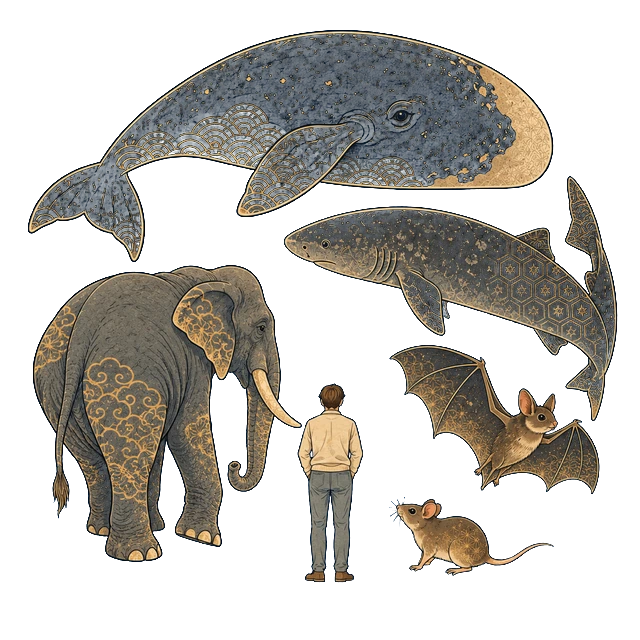
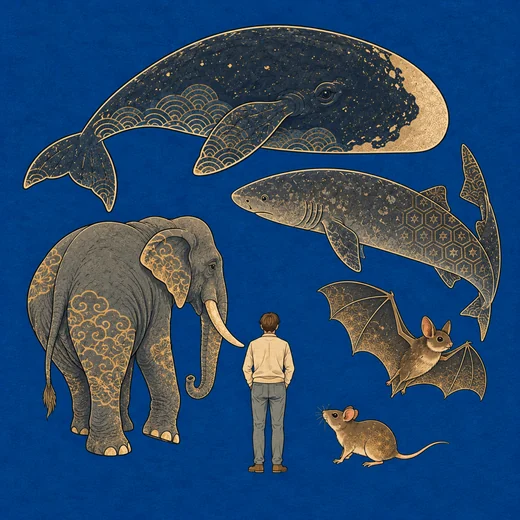
  1. Woodblock-style painting of a bowhead whale, a Greenland shark, an elephant, a human, a bat and a mouse.SpeciesPan-species models
  2. Woodblock-style painting of a human seen from behind.HumanHuman health models
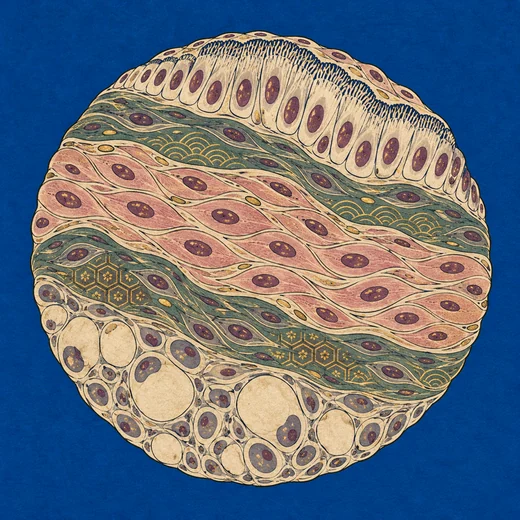
  3. Woodblock-style painting of a section of tissue.TissueVirtual tissues
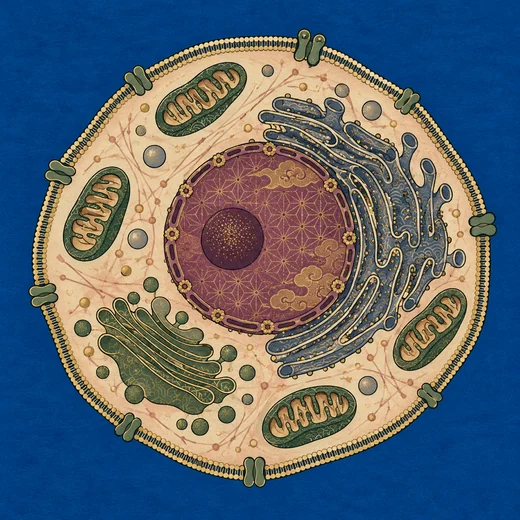
  4. Woodblock-style painting of a cell with its nucleus and organelles.CellVirtual cells
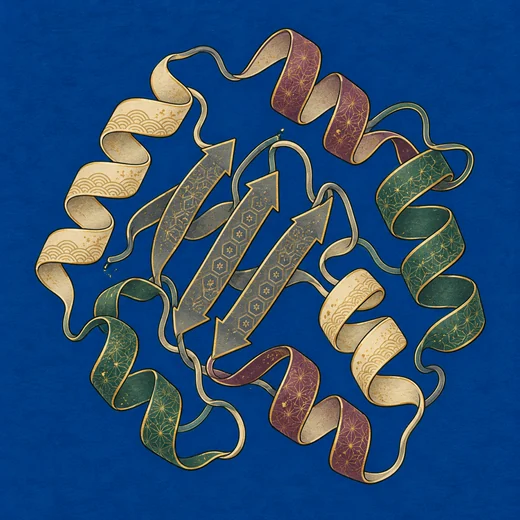
  5. Woodblock-style painting of a protein structure.MoleculeProtein models and design
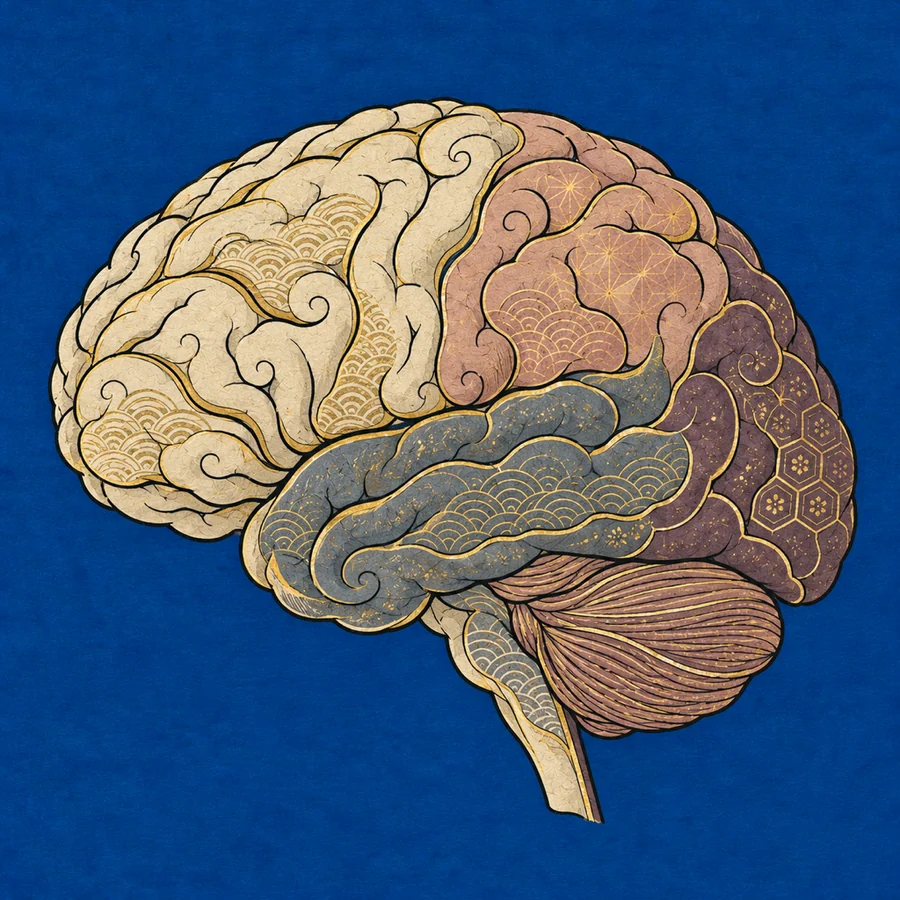
Woodblock-style painting of a human brain with a lattice of gold lines running through its folds.

Brain resilience

Aging is the largest risk factor for Alzheimer's and Parkinson's disease. Yet some people keep their memory and thinking into old age even when their brains carry the pathology of these diseases or a high-risk genetic variant. We want to know what protects them.

We expect the species that live longest to have the most resilient brains. A bowhead whale can live more than two centuries and a Greenland shark an estimated four, and a naked mole-rat lives decades longer than a rodent of its size. We compare their brains with human brains to find the protective molecules and cell states that human brains could borrow.

We model how each person's brain ages from molecular profiles of brain tissue, blood and cerebrospinal fluid. Resilience is then a measurable quantity: how far a person's course departs from the one expected from their age, pathology and genetic risk. The molecules and cell states that account for that difference become targets for the interventions the lab designs.

AI agents that read data and papers

Public repositories hold millions of molecular profiles, and the literature holds millions of papers. Most datasets were analyzed only for the question of the study that produced them. Our agents read the data and the papers together, run the analyses and propose what to test, assembling the story that thousands of separate studies tell about aging.

Each claim keeps a record of the dataset, code and paper behind it. In ClockBase Agent, agents reanalyzed public molecular profiles with aging clocks and nominated interventions predicted to lower biological age; one of them, ouabain, reduced frailty when tested in aged mice.

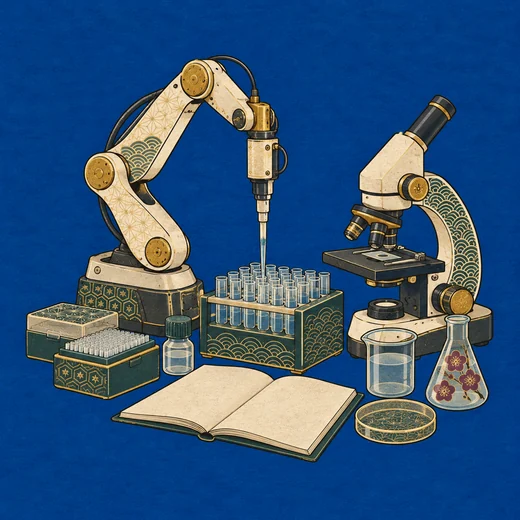
Woodblock-style painting of a robotic arm, a microscope and an open notebook at a laboratory bench.

Research

Each project follows the same loop: measure a biological state, model it, let the model nominate an intervention, design the molecule, test it, and return the result to the model. The five areas below are where the first projects will start.

Woodblock-style painting of a cell.

Foundation and world models of biology

A world model predicts how a biological state changes over time and in response to an intervention.

  • Foundation models of molecular state across omics
  • World models of the aging cell
  • Pan-species and evolutionary models of longevity

Woodblock-style painting of a human seen from behind.

Measuring and modeling aging

  • Biological age and module-specific aging signatures
  • Aging and resilience trajectories
  • Causal aging biomarkers
Woodblock-style painting of a robotic arm and a microscope at a laboratory bench.

AI agents for scientific discovery

  • Autonomous discovery of interventions from public data
  • Agent workflows in which every step can be inspected
  • Synthesis of public datasets and the literature
Woodblock-style painting of a protein structure.

Generative therapeutic design

  • De novo protein design for protein aggregation and neurodegeneration
  • Evolution-informed protein engineering
  • Experimental validation of targets proposed by the models
Woodblock-style painting of a section of tissue.

Disease areas

  • Brain aging, neurodegeneration and brain resilience, the lab's first system
  • Cancer and other age-related diseases, studied together
The model is the instrument
We test a hypothesis first in a pretrained model of biological state and take to the bench the predictions that hold up there.
Agents do the reading and the reanalysis
Public repositories hold millions of molecular profiles, most of them analyzed only for the question of the original study. Agents can reanalyze them with one measure, such as biological age, so results are comparable across studies.
Results trace to their source
For each candidate we keep the source data, the code, the model output and the literature search that support it.
The loop closes on experiments
A prediction about aging can be checked against physiological function and lifespan, and we hold every project to that test.

Work so far

Models, agents and software from Albert’s doctoral and postdoctoral work. Each has a public preprint, paper or code.

Selected publications

    The full list is on Google Scholar.

    Woodblock-style portrait of Kejun Albert Ying.

    People

    Kejun Albert Ying, PhD

    Principal investigator. Incoming Assistant Professor.

    Albert works on AI for science, with an emphasis on AI for biology and aging. He develops foundation models and world models for biological data and builds agentic systems for discovery. His earlier work includes causality-enriched aging clocks, ClockBase and MethylGPT.

    He did his postdoctoral research at Stanford University and the University of Washington, co-advised by Tony Wyss-Coray and David Baker, as an NIH/NIA F99/K00 fellow. He received his PhD from Harvard University in 2025, advised by Vadim Gladyshev, with the dissertation On the Quantification of Aging, and a master's degree in computational science and engineering from Harvard.

    He is a core member of the Biomarkers of Aging Consortium, an organizer of the Biomarkers of Aging Challenge, and a recipient of the 2026 WAIC Yunfan Award.

    The lab opens in January 2027, and the first members will shape how it works. See who we are looking for.

    Join the lab

    We are recruiting students, postdocs and visiting scholars.

    Email keying@stanford.edu

    Send a CV and a few lines on what you would want to work on.

    • Across disciplinesPeople trained in AI, biology or physics who want to learn the fields they were not trained in.
    • Self-drivenPeople who come for the question and choose their own problems within it.
    • AI-nativePeople who run every project with models and agents, from analysis to the bench.
    • How you workPeople judged on how they approach a problem more than on what they already know.

    What the paper found

    Read the paper